
Quick answer
The Bravo Reset is a 12-week body-contouring protocol designed specifically for clients coming off GLP-1 medications like semaglutide (Ozempic, Wegovy) and tirzepatide (Mounjaro, Zepbound). It addresses the three most common aftermath issues — stubborn residual fat pockets, lost muscle tone, and skin laxity — using CoolSculpting, CoolTone, and RF skin tightening in that order. Prerequisites: at least 3 months of weight stability, realistic expectations, and a consultation with a licensed medical provider.
GLP-1 weight loss is transformative — and uneven
GLP-1 medications have changed aesthetic medicine in ways nobody predicted three years ago. Weight loss of 15 to 20 percent is common, sometimes more. Clients come off these medications lighter, healthier, and — almost universally — dealing with a new set of aesthetic concerns the old weight masked. The fat loss is not evenly distributed. The skin does not always snap back. Muscle mass often drops alongside fat, especially in clients who did not resistance-train during the weight-loss phase.
At Bravo MedSpa we started seeing post-GLP-1 consultations in meaningful numbers around early 2024. By 2025 it was one of the fastest-growing categories of new clients, split roughly evenly between our West Hartford and Rocky Hill locations, with a notable concentration of clients from the Cromwell corporate corridor near our Rocky Hill location. The Reset is the protocol we developed in response.
The three things GLP-1s leave behind
Stubborn fat pockets. Lower abdomen, flanks, inner thighs, submental (double chin) — these are areas where fat is historically resistant to diet and exercise. GLP-1 weight loss reduces them but rarely eliminates them. This is what CoolSculpting Elite addresses directly.
Lost muscle tone. Rapid weight loss strips muscle alongside fat, especially in the core, glutes, and arms. Visually, this reads as "deflated." CoolTone uses magnetic pulses to force supramaximal muscle contractions — 30,000 per 30-minute session — which drives hypertrophy without gym time.
Skin laxity. The degree varies significantly — age, genetics, rate of weight loss, and whether you used GLP-1s for 6 months vs 18 months all matter. Mild-to-moderate laxity responds well to RF skin tightening. Severe laxity may warrant a surgical referral, and we will tell you honestly at consultation if we think that's the better call.
The 12-week protocol
The three phases overlap slightly, but each has its own dedicated block at the centre of the schedule. Weeks 1 through 4 belong to fat reduction — CoolSculpting Elite cycles across whatever pockets came back stubborn after your GLP-1 cycle. Weeks 5 through 8 shift the emphasis to muscle, with CoolTone sessions stacked four to six deep, sometimes layered with a CoolSculpting follow-up if one area needed a second cycle. Weeks 9 through 12 move to skin — RF skin tightening on whatever laxity remains after the earlier phases.
A small number of clients need additional submental (under-chin) work that the main protocol doesn't cover — for those, we add Kybella or RF microneedling to the schedule without disturbing the main 12-week rhythm. The table below is the baseline — everyone's Reset is a personalised version of it.
| Phase | Focus | Treatment | Detail |
|---|---|---|---|
| Weeks 1–4 | Fat reduction | CoolSculpting Elite | 2 cycles per area on average. Dual applicators cut schedule in half. Results build through week 12. |
| Weeks 5–8 | Muscle rebuild | CoolTone | 4–6 sessions, 30 minutes each. Alternate with CoolSculpting follow-ups if areas need 2nd cycle. |
| Weeks 9–12 | Skin tightening | RF skin tightening | 3–6 sessions per area spaced 2–4 weeks apart. Addresses residual laxity post-contouring. |
Why the order matters
We get asked constantly whether the phases can be reshuffled. Generally, no. Fat reduction happens first because both CoolTone and RF skin tightening produce meaningfully better visual results when performed on a leaner substrate. Tightening skin over a fat layer that's about to be reduced wastes the RF work. Building muscle under a fat layer is still useful but visually muted compared to the same muscle built after the fat is gone.
That said, there is flexibility within the 12 weeks. If you have only two concerns — say, fat pockets and skin laxity, with no meaningful muscle loss — we skip the CoolTone phase and compress to an 8-week plan. If you have only muscle and skin concerns, we skip CoolSculpting. Every Reset is individualised at consultation.
Who is a good candidate
- Weight-stable for ≥3 months. If you are still losing, the protocol is premature — come back when weight is stable.
- Realistic expectations. A protocol improves contour; it does not produce surgery-level results. We will walk through what's achievable at consultation.
- Generally healthy. Active infection, bleeding disorders, pregnancy, and certain medications are contraindications we'll screen for.
- Time for the schedule. Twelve weeks, roughly 8–12 appointments. Plan for it.
What it costs, honestly
Most full-body Reset plans run $6,000 to $10,000. That sounds steep until you price out the alternatives — liposuction for the same body areas would land $8,000 to $15,000 with meaningful recovery. The Reset has zero downtime, pays out over 12 weeks rather than all upfront, and addresses all three concerns instead of just fat.
We price each component per treatment. You can pace the investment across 3 months or spread it further. First-time clients save 10% on their initial treatment. No packages you can't exit, no financing traps, no pressure to add on. For a fuller breakdown of the body-contouring math, read our Connecticut CoolSculpting cost guide and the CoolSculpting vs CoolTone comparison.
The consultation
Every Reset begins with a 45-minute consultation at either location. We photograph from standard angles, pinch-test fat thickness in each area you're concerned about, assess skin elasticity, and talk through your GLP-1 timeline. You leave with a written plan — which areas, how many cycles, what it costs, what the schedule looks like. No treatment is performed at consultation; that's a separate visit so you can take the plan home, think about it, and come back when you're ready.
If you're a candidate for surgery rather than a non-invasive protocol, we will say so. We'd rather refer you than treat a case that isn't right for us. That's honest practice, and it's the standard we hold ourselves to.
Where to book
Both locations run Reset protocols on identical equipment. West Hartford tends to book slightly faster — the insurance-corridor catchment skews toward busier weekday schedules, so evening appointments go first. Rocky Hill has more weekday afternoon slots and pulls heavily from the Glastonbury and Cromwell corporate corridor. Choose whichever is more convenient for your schedule.
Start with a complimentary Reset consultation at either location. If you're unsure whether you're at the right point post-GLP-1, book the consultation anyway — we'd rather confirm you're ready than have you wait longer than you need to.
About the author
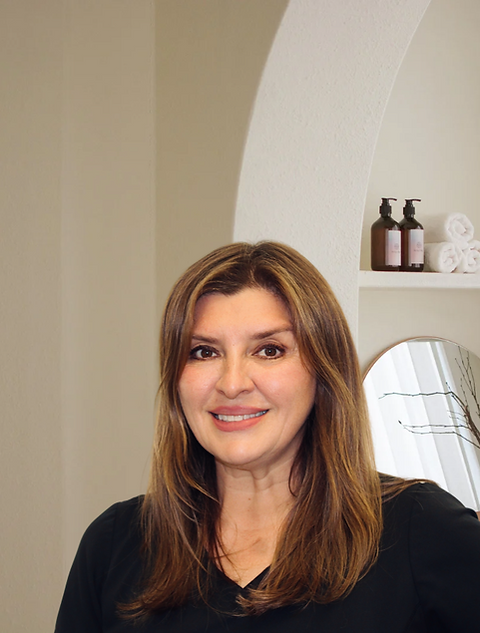
Alica Bravo, RN
Connecticut-licensed Registered Nurse, Allergan Medical Institute certified, Galderma Advanced Injector. Founder of Bravo MedSpa.
Full profile on the team page →